Bedding Guide
How to Choose a Comforter Weight for Year-Round Comfort
The right comforter can make a bed feel like a welcoming retreat—not a nightly negotiation with the thermostat. Weight matters, but it is only one part of the picture: fill, room temperature, sleep habits, and the way you layer your bedding all shape how warm or cool you feel. Here’s how to choose a comforter weight that works for your life, through more than one season.
What “comforter weight” really means
Shopping for a comforter can bring you face to face with terms such as lightweight, summer weight, all-season, and winter weight. They sound straightforward, but there is no single industry-wide scale that makes those labels directly comparable across brands. One company’s “lightweight” may feel different from another’s, especially when the comforters use different materials, construction methods, or shell fabrics.
Weight can refer to the amount of filling in a comforter, the finished item’s overall heft, or a maker’s shorthand for its intended warmth. With down, you may see fill power, which describes the loft of the down rather than serving as a simple warmth rating. With wool or other fibers, the fill weight may be listed as grams per square meter. Construction also matters: how evenly the fill is distributed and whether the comforter uses stitched compartments can influence how it feels and performs.
In other words, the number on a label is a useful clue, not a complete forecast. The best comforter weight is the one that provides enough insulation for your bedroom and sleeping style without leaving you too hot, too cold, or constantly reaching for another layer.
Start with your own sleep temperature
Before comparing comforters, think about what happens after you turn out the light. Do you tend to kick off the covers, even in winter? Do you wake up chilly and reach for extra bedding? Does your partner prefer a noticeably different level of warmth? These small patterns are often more useful than a label alone.
People who sleep warm may feel more comfortable under a lighter comforter, even when the room is cool. A breathable cover and a fill that does not feel overly insulating can help reduce that tucked-in, overheated feeling. If you sleep cool, prefer a deeply cozy bed, or live in a cold home, a heavier option may feel more reassuring. The goal is not to follow a universal rule; it is to find a balance that supports comfortable sleep for you.
Consider your usual sleepwear and other bedding, too. Flannel sheets, a mattress protector, pajamas, and an extra blanket all contribute to warmth. A comforter that feels just right with crisp cotton sheets may feel too warm when paired with several insulating layers. When evaluating your current setup, look at the bed as a whole rather than treating the comforter as an isolated choice.
- If you often wake feeling hot: Begin by considering a lighter comforter and breathable layers.
- If you often feel cold: A warmer comforter or an additional removable layer may suit you better.
- If your comfort changes through the night: Look for a setup that is easy to adjust rather than relying on one fixed level of warmth.
- If you share a bed: Talk about each person’s preferences; separate blankets can sometimes be a practical solution.
Let your bedroom have a say
A comforter does not experience seasons the way a calendar does. It responds to the conditions in your bedroom. A well-heated room may call for less insulation in January than a drafty bedroom requires in spring. Likewise, a room that stays cool overnight can make a medium-weight comforter feel just right throughout the year.
Think about your home’s nighttime temperature, heating and cooling habits, window exposure, and airflow. A sunny upper-floor room may hold warmth after sunset, while a basement bedroom may stay cool even during warmer weather. If you use a thermostat, consider the temperature you actually maintain overnight—not just the setting you use during the day. If you do not control the temperature consistently, flexibility becomes especially valuable.
It can help to keep a short note for a week or two: the approximate room conditions, what bedding you used, and whether you woke comfortable. You do not need a perfect measurement. A few observations can reveal that the issue is not the comforter’s weight at all. A warm mattress, heavy pajamas, or a room that does not ventilate well may also contribute to discomfort.
Understand the role of fill material
Two comforters with similar listed fill weights can feel quite different. Fibers vary in loft, density, resilience, and the way they manage moisture and airflow. The outer fabric matters as well: the weave, thickness, and hand of a shell can change the overall sensation of the bed.
Down is valued for its light, lofty feel. Its warmth depends on several factors, including the amount and quality of the fill and the comforter’s construction. A high-loft down comforter can feel warm without the same dense, substantial sensation as a heavier blanket. Shoppers considering down may also want to review sourcing standards, care instructions, and the product’s construction details.
Wool is another fill to consider. Wool fibers are naturally springy and are often chosen for their ability to handle moisture and provide insulating comfort. A wool comforter may feel different from a down comforter even when both are intended for lighter or warmer conditions. It is worth reading the maker’s description and care guidance, because wool-filled bedding is not always machine washable.
Synthetic fills and other natural fibers each have their own feel and performance characteristics. The practical takeaway is simple: do not select a comforter by weight alone. Compare the material, the maker’s warmth guidance, the construction, and the care requirements. If possible, use product specifications to understand what is inside rather than relying on a label such as “all-season” to answer every question.
Lightweight, medium, or winter weight?
Although brands define their categories differently, the usual labels can help organize your search. They describe broad intentions—not guarantees—and should be considered alongside the details of the specific comforter.
Lightweight or summer weight
A lightweight comforter is commonly designed for warm bedrooms, warmer sleepers, or people who want a covering without much insulation. It can also work as part of a layered bed in cooler weather. If you regularly feel too warm beneath a standard comforter, a lighter option may be a sensible first change.
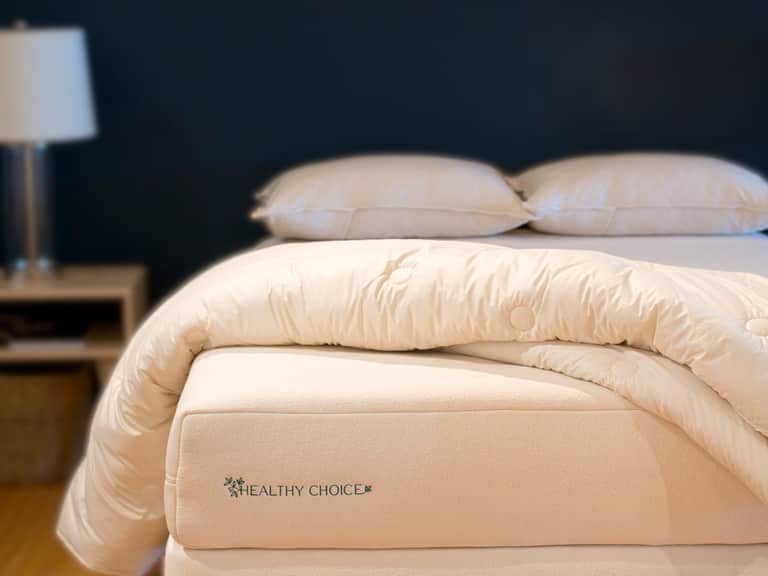
For example, the Healthy Choice Lightweight Organic Wool Comforter is described as suitable for warm climates, people who sleep warmer, and those who need a lighter comforter. Its listed fill is 150 grams per square meter of organic wool, and it has a GOTS-certified organic cotton sateen cover. Those specifications give shoppers more context than the word “lightweight” by itself. The maker advises spot cleaning rather than washing the comforter, so its care requirements are also worth considering before choosing it.
All-season or medium weight
An all-season comforter aims to serve across a wider range of temperatures. That does not mean it will be ideal in every climate, bedroom, or sleep situation. For someone in a moderate room who sleeps neither especially warm nor especially cool, a middle-ground option may be convenient. For another person, the same comforter could feel too warm in summer and too light in winter.
When a product is labeled all-season, look for measurable details and a clear description of the intended use. Ask whether you can add a blanket in colder months, remove layers when the weather changes, or use a duvet cover that is easy to switch out. Flexibility may matter more than finding a single item that claims to fit every circumstance.
Winter weight
A winter-weight comforter is generally intended to provide more insulation for colder rooms or people who sleep cool. It may feel wonderfully cozy in a chilly bedroom, but excessive warmth can interrupt comfort if your room is heated or you tend to sleep hot. Consider whether you need a dedicated cold-weather option or whether a medium comforter paired with an extra blanket would be easier to adapt.
Could one comforter work all year?
For many households, the answer is yes—provided the home’s temperature and the sleeper’s preferences stay within a comfortable range. A moderate-weight comforter can be a practical choice when the bedroom does not swing dramatically between seasons. In a climate-controlled home, it may be possible to use the same comforter year-round and adjust sheets or sleepwear as needed.
But “year-round” does not have to mean “one piece of bedding does everything.” A lighter comforter with an extra blanket nearby offers a simple way to respond to a cold snap. In warmer months, the comforter can be used alone or exchanged for a lighter covering. A flexible approach can reduce the pressure to choose a perfect weight on the first try.
Some shoppers exploring Coyuchi comforters may encounter different materials, constructions, and warmth descriptions across a brand’s bedding range. Rather than assume that a brand name or collection label determines the right warmth, compare the details of the specific model you are considering. Check the listed fill, size, construction, care instructions, and the maker’s guidance about seasonal use. Product availability and specifications can change, so confirm current details before making a decision.
Use layering to make your choice more forgiving
Layering gives you options when temperatures shift. A duvet cover protects the comforter and can make routine upkeep easier, while sheets and a blanket can add or reduce warmth without replacing the main fill. In a cooler bedroom, a light comforter plus a washable blanket can be more adaptable than one very heavy comforter. In a warmer space, a breathable sheet and a light comforter may be all you need.
Think about how easy the layers are to manage. A blanket that is simple to fold back can be more useful than a thick bedspread that stays in place all night. If you share a bed, each person may prefer a separate top layer, even if you continue to share the same fitted sheet and mattress. It is a practical adjustment that can help accommodate different sleep temperatures.
Layering also helps when you are uncertain about your ideal comforter weight. Instead of immediately choosing the heaviest option, start with a weight that seems appropriate for your most common conditions and add a removable layer for colder nights. If you are consistently too warm, you can simplify the bed and reassess.
Construction and fit matter, too
A comforter needs to cover the bed appropriately and keep its fill reasonably distributed. Check the product’s measurements against your mattress, especially if the mattress is unusually deep or you prefer generous drape at the sides. A comforter that is too small can leave sleepers uncovered; a very large one may feel cumbersome or be harder to care for.
Construction affects how the fill sits inside the shell. Some designs use stitched patterns or compartments to help hold the filling in place. Even distribution can help avoid noticeable thin or overly full areas, though the exact experience depends on the design and material. If you share a bed, consider whether the comforter stays in place when one person moves or pulls it toward their side.
Pay attention to the shell fabric as well. A cover’s texture and breathability can influence whether a comforter feels crisp, smooth, or more substantial against the body. Since the shell is in direct contact with other bedding, its fiber content and weave are part of the comfort equation—not just finishing details.
Read certifications and care labels carefully
If organic or responsibly sourced materials matter to you, check what a certification applies to. A certification may cover the textile processing, the material, or a specific part of a product; it does not automatically describe every component or make performance claims about warmth. Read the product information closely and look for the scope of the certification rather than relying on a broad phrase alone.
Care is just as important. Some comforters can be machine washed, while others require spot cleaning or professional care. A comforter that needs more careful maintenance may still be the right choice, but you will want to know that before purchase. A duvet cover can help protect bedding from everyday soil, though it does not replace following the manufacturer’s instructions.
For wool-filled bedding in particular, do not assume that natural fibers can be washed like ordinary sheets. Follow the care label. For the Healthy Choice Lightweight Organic Wool Comforter, the listed guidance is to spot clean with a small amount of water and light soap if needed, air dry, and air the comforter periodically. Use a cover if you want an extra protective layer.
A practical checklist before you buy
When several comforters seem promising, a short comparison can make the choice feel less overwhelming. Write down the answers to these questions and use them to narrow your options:
- How do I usually sleep? Note whether you tend to feel warm, cool, or comfortable under your current bedding.
- What is my bedroom like overnight? Consider heating, cooling, drafts, and how much the temperature changes with the seasons.
- What does the weight label mean for this product? Look for fill weight, material details, and the maker’s intended use.
- What other layers will I use? Sheets, pajamas, blankets, and a duvet cover all affect the overall warmth.
- How will I care for it? Check washing, airing, storage, and cover recommendations.
- Does it fit my bed and habits? Confirm dimensions and consider whether you share the comforter.
- Are the material claims clear? Review certifications and sourcing language in context.
Common comforter-weight mistakes to avoid
One easy mistake is choosing the warmest comforter available because it seems like the safest option. More insulation is not automatically more comfortable. If you sleep warm or keep the bedroom heated, a heavy comforter may turn a cozy bed into a restless one.
Another is treating “all-season” as a promise that the same comforter will suit every sleeper and climate. The term is broad, so product details and personal conditions still matter. A third mistake is overlooking care. If a comforter requires special handling, make sure its maintenance fits your routine and that you understand how to protect it between washes.
Finally, do not judge solely by a picture or a single number. Weight, loft, fabric, construction, and temperature all work together. A thoughtful comparison is more useful than trying to decode one label in isolation.
The bottom line: choose for the bed you actually sleep in
Year-round comfort is not about finding a universally perfect comforter. It is about matching warmth and weight to your bedroom, your sleep temperature, and the layers you are willing to use. A lightweight option can be a strong fit for warm sleepers and warm rooms; an all-season choice may work in a more stable environment; and a winter-weight comforter can make a cool bedroom feel inviting. None of those labels replaces a close look at material, construction, and care.
If you want one comforter for most of the year, choose a weight that suits your most common nights and keep a removable layer available for temperature swings. If your seasons are pronounced or you and your bed partner have different preferences, a more adaptable setup may be the better answer. Pay attention to how you feel when you wake up, adjust one layer at a time, and let your real sleep experience guide the decision.
The best comforter is not simply the heaviest or the most highly labeled. It is the one that helps your bed feel comfortable night after night—and gives you enough flexibility to stay that way when the weather changes.